16 March 2026 | Jabeer Butt
As the Race Equality Foundation, Joseph Rowntree Foundation, and the Centre on the Dynamics of Ethnicity, launch their landmark conference, ‘Advancing Racial Justice: Convention on the State of Data 2026’, our Chief Executive, Jabeer Butt, reflects on the use, and mis-use, of ethnicity data from the 1960s to the present day. Charting this history, he illustrates why we record ethnicity, and, importantly, why the racially just use of data is now more than ever needed in efforts to tackle racism.
The recent interim guidance from the National Police Chiefs’ Council, issued with the College of Policing, encourages forces to confirm the ethnicity and/or nationality of suspects in certain high-profile cases. The stated aim is transparency: without disclosure, misinformation may flourish and public confidence may suffer. Transparency is important. But when it comes to the recording and publication of ethnicity, history matters.
For many Black, Asian and minoritised ethnic communities, the state’s interest in recording ethnicity has not always been experienced as benign. In the late 1960s, Birmingham City Council coded tenants who were “obviously not white” and implemented dispersal policies to limit the concentration of Black residents. In social services, children’s ethnicity was recorded in ways that enabled foster placements labelled “no black children”. In the early 1980s, the Metropolitan Police released “mugging” statistics based on victim perception, linking crime to “coloured” assailants and reinforcing damaging stereotypes.
In each case, ethnicity was recorded. But it was not recorded to tackle discrimination. It was used in ways that could manage, pathologise or criminalise communities.
That history shaped the fierce debate over including an ethnic group question in the 1991 Census. The issue was not simply whether to ask a question, but what kind of question the state was prepared to ask. Earlier approaches had relied on nationality or country of birth, measures that campaigners argued failed to capture the lived reality of racialised disadvantage, particularly for second-generation Black and Asian communities. During the 1980s, the then Office of Population Censuses and Surveys, carried out extensive consultation and testing exploring different formulations, including how far categories should reflect colour, geography, culture or self-defined identity. The eventual question was the product of negotiation between statistical pragmatism and political pressure, producing categories that combined elements of race, national origin and ethnicity. The mechanics of classification were debated in detail, yet the underlying purpose remained contested: was the Census measuring difference for administrative description, or creating a tool to identify and tackle racial discrimination?
However, purpose is everything. Over the past three decades, something important has shifted. In health and care, the recording of ethnicity increasingly became associated with accountability. Data exposed inequalities in maternal outcomes, mental health detentions, access to treatment and life expectancy. It helped show that disparities were not anecdotal but systemic.
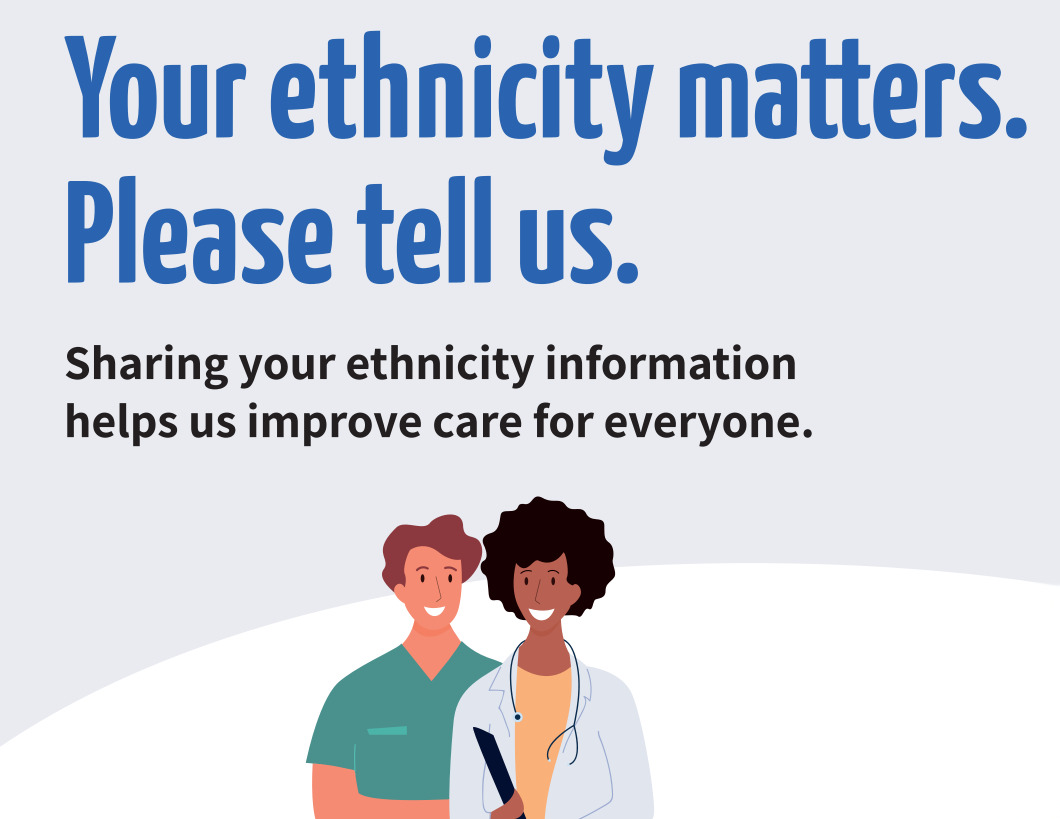
Our recent report, Exploring Ethnicity Data Use and Gaps in Health Care, reinforces this. Across sectors, organisations told us they record ethnicity primarily to monitor service access and improve fairness not to label individuals as risk factors. Participants were clear: ethnicity data must have a purpose, and that purpose must be anti-racist. Without clarity about how data will be used to tackle inequality, mistrust grows. When data is collected but not meaningfully used, it reinforces scepticism.
We also heard something else. Despite persistent gaps, such as inconsistent ethnic categories, overuse of the “Other” ethnic category, fragmented systems, limited training, ethnicity data remains essential infrastructure for change. As one contributor put it, rather than waiting for perfect data, we must use what exists but do so transparently and responsibly. Frustration with imperfect datasets cannot become an excuse for inaction.
This perspective is crucial in the current debate. The NPCC guidance frames disclosure as a matter of consistency and public confidence. But consistency without historical awareness is not enough. When ethnicity is published in the context of criminal investigation, it enters a social and political environment shaped by decades in which statistics have been selectively used to associate crime with racialised communities. The question is not whether ethnicity should ever be recorded or reported, it is: to what end?
If ethnicity is treated as an individual trait that explains behaviour, it risks reinforcing harm. If it is treated as a lens through which to examine how racism shapes outcomes whether in policing, health, housing or employment, it becomes a tool for justice.
That distinction matters deeply in health and care. Research using longitudinal data has demonstrated that racism harms health directly and indirectly across the life course. Yet too often ethnicity is analysed as if it were a biological or cultural variable, detached from structural context. When that happens, data can obscure the very inequalities it is meant to reveal.
There are, of course, challenges. Categories are socially constructed and evolve over time. Public trust cannot be assumed. Access to disaggregated data remains uneven. Training in racial literacy and ethical analysis is patchy. Our research found that fewer than one-third of organisations collecting ethnicity data provide mandatory training to those doing so. Infrastructure across systems remains fragmented. But none of these challenges point towards retreat. Without the recording of ethnicity:
- We cannot demonstrate structural discrimination.
- We cannot assess whether interventions are reducing inequality.
- We cannot hold institutions accountable.
The absence of data does not produce neutrality. It produces invisibility.
The debate sparked by the NPCC guidance is therefore an opportunity not simply to argue about disclosure, but to revisit the deeper question of why we record ethnicity at all.
That question sits at the heart of our forthcoming conference, Advancing Racial Justice: Convention on the State of Data 2026, where we will explore how to build data systems that illuminate inequality rather than entrench it, and how to ensure that ethnicity data serves justice, not stigma.