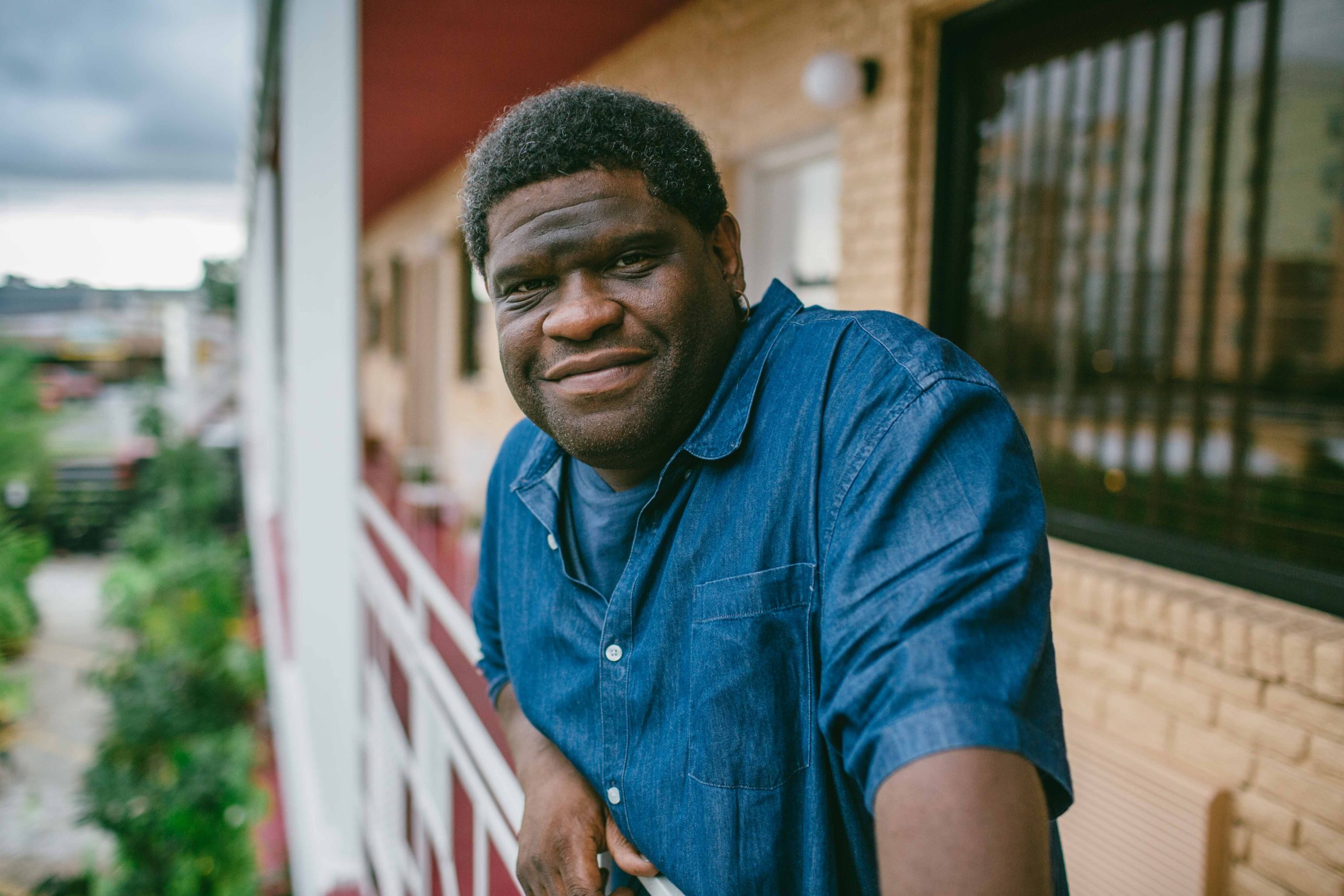
Gary Younge | University of Manchester
In her biography of Harlem Renaissance writer Zora Neale Hurston, Valerie Boyd explains why it was so difficult to track Hurston’s whereabouts during the novelist’s early twenties. “In 1911 it was relatively easy for someone, particularly a black woman, to evade history’s recording gaze,” wrote Boyd in Wrapped in Rainbows: The Life of Zora Neale Hurston. “If not legally linked to a man, as daughter or wife, black women did not count in some ways – at least to the people who did the official counting.”
The question of who counts and whom is counted is not simply a matter of numbers. It’s also about power; the less of it you have, the less say you have in what makes it to the ledger and what form it takes when it gets there. Collecting information, particularly about people, demands both the authority to gather data and the capacity to keep and transmit it. Those who have both the authority and the capacity need to feel that the people on whom they are keeping tabs on matter. This is why we know precisely how many US military personnel have been killed in this current conflict but have only approximate numbers for Iranian fatalities.
In other words, data is not neutral. The data to which we will be referring today is not collected at random or referred to by chance. There is a reason, indeed many reasons, why we collect it and multiple ways, not all necessarily positive, in which it might be used. This morning I want to offer a thought experiment: namely to imagine that the data we will be referring to did not exist and to explore why that might be and what potential and pitfalls there would be in bringing that data into existence. If this sounds abstract, then it shouldn’t. Because, with the exception of Ireland and Balkan states – where the question is often voluntary – no other country in Europe collects racial data in the way that we do. We cannot say, with any certainty, how many Black people there are in other European countries. We also cannot tell how they are faring in the judicial, health or education systems. The data doesn’t exist.
There are four main reasons for this, depending on where in Europe you are. In France, collecting data through racial categorisation is literally a crime. A violation of the Republican values, born from the 18th century revolution, that state that citizenship is indivisible. You are French or you are not. All other designations are considered not just irrelevant, but verging on the immoral.
In Germany and other mostly central European countries, there is a different issue: namely that if we count them, we might kill them. In the wake of the Holocaust, many countries believed that racial annihilation was made possible by racial categorisation. The construction of the racial state had proved so calamitous and pathological that the notion of ‘race’ itself became taboo. When a new version of the standard dictionary Duden appeared at the East German Leipzig Book Fair in 1947, the term ‘Rasse’, or race, referred only to breeds of dogs.
Third, and following on from that in an almost retrospective intellectual fix, comes the insistence that race is a construct that we should not dignify with categories and the official, bureaucratic endorsement of counting. To count it is to indulge it.
And finally, a point rarely openly made but I believe to be dominant in official thinking, particularly in many parts of Eastern and Central Europe, is that in terms of numbers, this is not a meaningful or well-understood category and therefore, not worth the bother.
Moreover, few people relish having their identity reduced to tickable boxes, which are completely unsuitable for expressing the full complexity of the human experience. “One notices the census-makers passion for completeness and unambiguity,” writes Benedict Anderson in Imagined Communities. “Hence their intolerance of multiple, politically ‘transvestite,’ blurred, or changing identifications. Hence the weird subcategory, under reach racial group of ‘Others’ – who, nonetheless, are absolutely not to be confused with other ‘Others.’ The fiction of the census is that everyone is in it, and that everyone has one – and only one – extremely clear place. No fractions.”
Any box-ticking exercise can be refined, and yet it will remain necessarily crude. By their nature, boxes seek to highlight not the particular, but the general – their aim is not to understand how we feel, but how we might be counted. And how we are counted is no neutral factor. It shifts with the balance of power and the tide of history. Where race is concerned, fractions have, in fact, played a part. In America, Black people were once understood as 3/5ths of a person. Until 1930, ‘mulatto’ (meaning one Black parent and one white and derivative of mule – half horse, half donkey) was a category on the US census. Until 1890, ‘quadroons’ (one Black grandparent) or ‘octoroons’ (one Black great grandparent) were also included. It should go without saying that everyone is unique. But it should also go without saying that a tick-box is not where their uniqueness will be displayed.
Finally, given Europe’s history, the fear that once collected this data might be employed to exclude or even exterminate, should not be dismissed out of hand. That could happen. This has happened. All one can really argue by way of mitigation is that it was not the information that killed them but the politics. Systems without means of overt categorisation have still managed to persecute minorities because there is more to being an ethnic or racial minority than paperwork. There are family ties, places of worship, religious garb, and skin colour. As anybody who grew up during the Troubles in Northern Ireland will tell you, if people want to know what category you belong to, they have ways of finding out that have nothing to do with what is on your documents – like your name, where you live, or what school you went to. There has to be a degree of trust in those asking the question and a sense that the question is pertinent for people to answer it in the first place. That’s why the answers have to be through self-definition and the questions are often voluntary. In the words of Stuart Hall, “there are no guarantees”.
So, we should not dismiss Europe’s reluctance and refusal to collect racial and ethnic data completely out of hand. There are babies in that bathwater. Collecting racial and ethnic data does present challenges and demands care, thought, and a degree of nuance. It can be used for ill and ill-describes our lived experience. But coming back to my original point, if the issue of who counts and whom is counted is about power, then that is no less the case when it comes to who is not counting and whom is not counted. As such, the arguments justifying the pan-Continental policy of eschewing racial data implode under the central contradiction of Europe’s racial self-delusion: namely, that it regards itself as a continent that is both ‘raceless’ and ‘white’.
Neither of these things are remotely true. Far from being ‘raceless’, the construct of race was built both by Europe and around it. Europe is, however, wilfully and insistently unaware of the role that race has played in its history. Not every European state had colonies or practiced slavery, but there was no European state that was immune from the impact of colonialism and slavery both on its economy, politics, and culture. Refusing to acknowledge this, Europe treats race as though it were an artisanal product unique to the US – like parmesan cheese or champagne.
When I refer to Europe as seeing itself as white I do not mean ‘mostly white’ but ‘essentially white’ – as in an eternally, fundamentally, and necessarily white area in which some non-white people have settled. This is equally absurd. Given the centuries-long and geographically vast presence of both the Moors, in the South and West, and the Ottoman Empire, in the south and east, not to mention the Roma and Sinti communities (the continent’s largest ethnic minority) who have been settled mostly in Central Europe since the Middle Ages, Europe has never been exclusively ‘white’ as we understand the term today.
For the continent to preserve the illusion that it is both raceless and white, it cannot count race lest it finds itself in violation of its default identity. The trouble is, this demands not just a denial of the data, but of the legacy that makes the data necessary. After all, they collect data on who speaks what language – often a marker of a community identity that was used as grounds for expulsion after the war, and a potential faultline for power in countries like Belgium, Bulgaria, Switzerland, Spain, Moldova and beyond.
For while race may be a construct, racism most certainly isn’t. If it was, fascism wouldn’t once again be a mainstream ideology in Europe. The fact that the French constitution refuses to discriminate between races doesn’t obviate the fact that French society discriminates against races. Having no data forces a general and ill-informed discussion with no empirical guardrails – abandoning a systemic problem to anecdote, prejudice, stereotype, guesswork, erasure, and proxy. If you can’t measure a problem, you can argue the problem doesn’t exist. The fact is that most European countries see certain migration as a problem, and count these migrants assiduously, but they do not count Black people because they do not consider their collective experience to be of any statistical or governmental value.
Once the problem becomes undeniable, they must find proxies. In the absence of race, they count ‘those with an immigrant background’, or some other euphemism which negates the issue of whether you were born in a place, consigning those with a migrant ancestor to the immigrant pile for eternity. The Germans may be squeamish about collecting data about people’s religion directly, but last year an AfD MP asked for the most common names of people receiving a certain welfare payment. When the answer came back Michael, Tomas and Andreas, he made a follow-up inquiry asking them to aggregate three spellings of Mohammed – when that came up top, he had the answer he was looking for.
The absence of actual numbers allows people to conjure data out of thin air and then exploit them for moral panics. A 2014 Ipsos/Mori poll revealed that the Hungarians thought there were 17 times more Muslims in Hungary than there actually were; the Spanish, 8 times; and the Belgians, five times.
The absence of data makes discussions about systemic and institutional racism impossible because there is no way of seeing where bottlenecks and blockages occur, of gauging intersectional challenges – particularly regarding class, gender, ethnicity, and religion – and of assessing inequalities.
In a world where few would deny that racism exists but very few would admit supporting it, this not only gives us racism without racists, but without races at all – a global assault on an apparently invisible people.
Having the data does not guarantee a meaningful discussion will ensue – just look at what happened after Southport – but not having it means very few meaningful discussions are actually possible.