Recruiting families to a study about youth violence is not simply a matter of identifying eligible participants and completing forms. It requires trust, careful explanation and strong relationships with parents, young people and the professionals who support them.
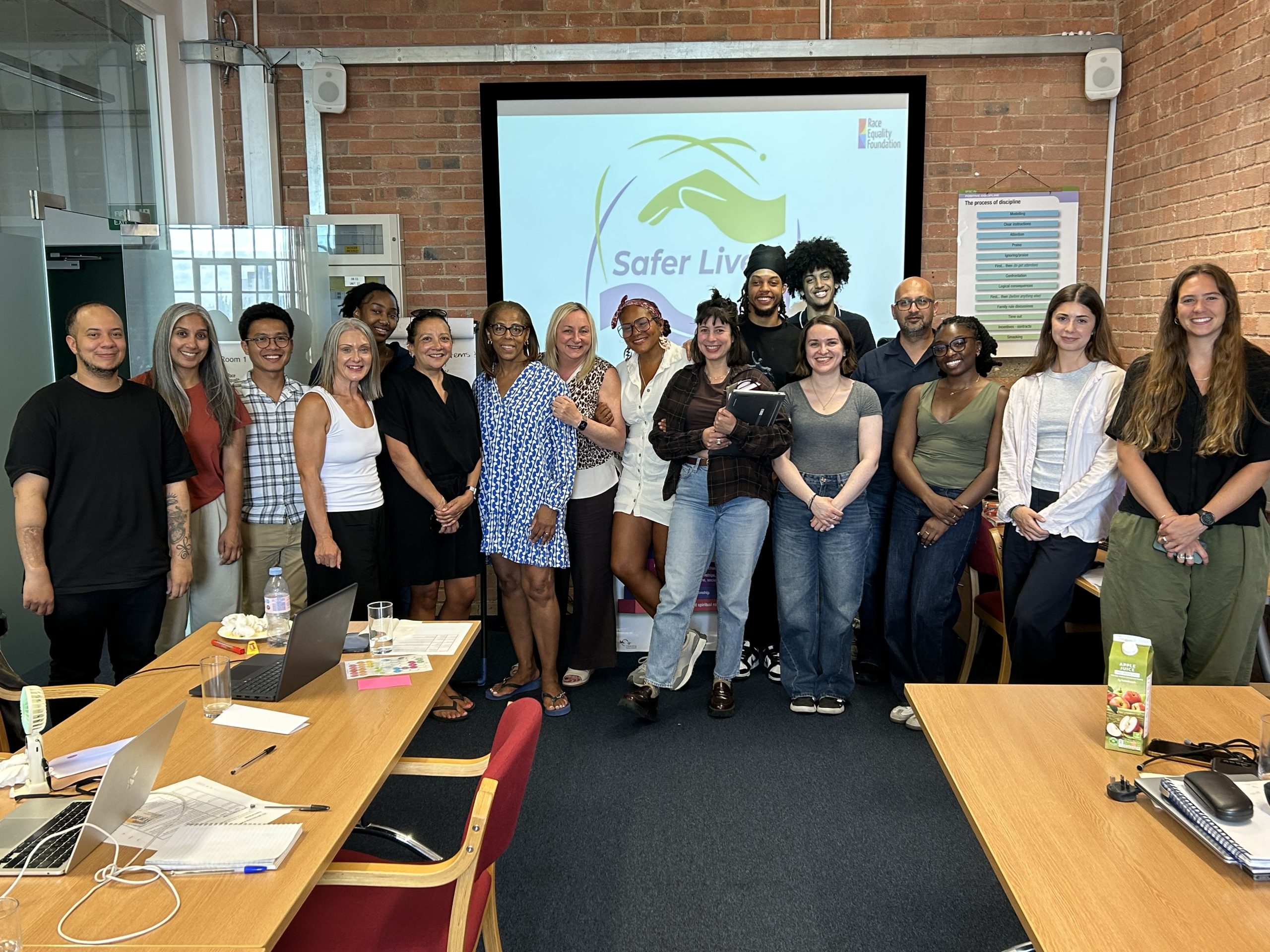
Over recent months, the Race Equality Foundation has been delivering the pilot phase of SFSC: Safer Lives. This utilises our Strengthening Families, Strengthening Communities parenting programme for families where a young person is involved in, or at significant risk of, offending and violence.
The programme supports parents and carers to strengthen family relationships, communicate more effectively, set boundaries and better understand the pressures affecting young people. It also includes additional content on the drivers of youth violence, adolescent development, risk-taking, technology and social media.
The wider study is being independently evaluated by researchers from the Universities of Greenwich, Manchester and City St George’s, University of London. The evaluators will be reporting on the study much further down the line but for now what we can share are our reflections as the organisation responsible for working with local partners, recruiting families and delivering the programmes.
Significant progress during the pilot
The pilot recruitment phase generated 131 referrals from services across London and Greater Manchester. Sixty-six families completed the necessary consent and baseline processes and were randomised into the study, with 33 parents allocated to receive the SFSC: Safer Lives programme.
Five parenting groups began delivery and are now approaching their final sessions.
These numbers represent a considerable amount of work by families, Youth Justice Services, other referring organisations, the programme officers and peer researchers and the independent evaluators. Behind every referral was a process of engaging frontline workers, discussing eligibility, introducing the study, contacting families, answering questions and supporting parents and young people to make an informed decision about whether to participate.
The progress made during the pilot has shown us that services and families are willing to engage with this work, but we are also clear, engagement cannot be taken for granted.
Recruitment depends on relationships
One of our strongest reflections is that recruitment is relational rather than administrative. Where practitioners understood the study and felt confident explaining it, families often had a clearer sense of what they were being invited to join. Referrers were not simply passing on names, they were helping families make sense of a research study that includes data collection and random allocation, alongside the possibility of taking part in a parenting programme. In some cases referrers were key figures of trust who supported access to the parent and young person and facilitated their participation, whereas in other cases the independence of our own team was key in ensuring the families were able to trust the study.
It was important that practitioners understand both the potential value of the opportunity and the importance of presenting it honestly. Families need to know that participation is voluntary and that joining the study does not guarantee a place on the programme.
The delivery team found that face-to-face contact with services was particularly valuable. Being present in Youth Justice offices, attending team meetings and building relationships with managers and frontline practitioners helped create opportunities for questions and more informed conversations.
Individual discussions with referrers were also important. Local services work in different ways, and the pressures affecting families vary considerably. We are clear that a single standard approach is unlikely to work everywhere.
Young people must be treated as participants in their own right
Another important reflection has been the need to engage young people directly and respectfully.
Parents and young people both need to agree to take part in the study. Young people therefore cannot be treated as passive participants whose involvement follows automatically from a parent’s decision. Peer researchers have played an important role in helping young people understand what participation involves, supporting communication and bringing a less formal and hierarchical approach to engagement. Young people need clear information, the space to ask questions and the reassurance that their choice will be respected. They also need to understand why they are being asked questions and how their information will be used.
This is particularly important in research connected to youth justice, where young people may already have extensive experience of being assessed, questioned or spoken about by professionals.
Rigour and accessibility must go together
The pilot has also highlighted the tension that can arise between the requirements of a rigorous research process and the need to make participation manageable for families. Consent and baseline data collection require care and consistency. At the same time, lengthy explanations, formal documents and multiple appointments can feel demanding, particularly for families already managing significant pressures.
Our review discussions have therefore focused on how information can be made clearer and more accessible without weakening the quality of the research process. This includes using shorter guidance, visual flowcharts and more consistent explanations of consent, randomisation and safeguarding.
We have also reflected on the need to frame the study in a way that does not make families feel blamed or judged. SFSC: Safer Lives is based on the understanding that parents and carers can be an important source of protection and support rather than the problem. Youth offending and violence is shaped by a much wider context, including poverty, racism, exclusion, exploitation and the availability of support within communities.
Learning requires honest review
A pilot should create space to identify what is working operationally and what needs to change.
Our internal review brought together delivery and research colleagues to consider recruitment, communication, data systems, safeguarding processes, workload pressures and joint working. The discussion recognised the commitment and flexibility shown across the team, while also identifying areas where processes need to become clearer and more consistent.
There was a strong shared view that reflection should continue throughout the study, rather than only taking place when a problem arises or at the end of a delivery cycle. We also need to listen closely to referral partners and families. Their experience can help us understand where explanations are unclear, where processes create unnecessary pressure and where additional support may be needed.
These are operational reflections and are essential to our responsibility as a delivery organisation. A well-designed programme cannot be implemented successfully without strong systems, trusted relationships and a willingness to adapt practice.
Looking ahead
As the five pilot programmes reach their final sessions, our immediate priority is to support parents to complete the programme and to work with the evaluators on the next stages of the study.
We are also preparing for future recruitment and delivery cycles. This includes strengthening existing partnerships, building relationships with additional services, improving our communications and ensuring that venues, facilitators and delivery arrangements are planned well in advance.
The pilot has reinforced what we know from years of SFSC delivery and the broader work of the Foundation: inclusion is not achieved simply by inviting people minoritised and marginalised communities to participate. It depends on how people are approached, whether their choices are respected, whether information is accessible and whether research and services are designed around the realities of their lives. The formal evaluation will ultimately assess the impact of SFSC: Safer Lives. Our role is to continue delivering the programme with care, learning from experience and creating the conditions in which families can participate meaningfully.